
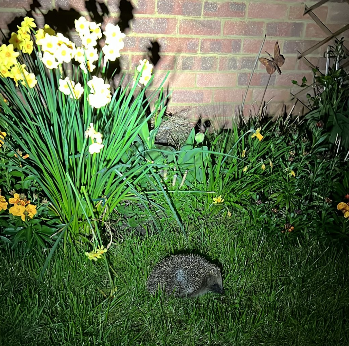
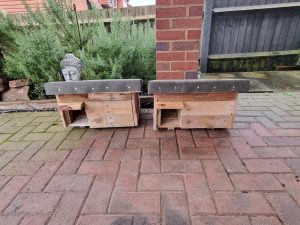
On Thursday 26th March, a team from Lucy Electric visited the 21st Century Thame habitat workshop to build some hedgehog houses ready for breeding season.
The team made 7 houses, 3 of which are already earmarked for schools in Oxfordshire and Bucks.
The others are available for purchase at £45.
Proceeds from the sales go towards the work to reclaim the pallet wood and prepare it for habitat building and towards the work that 21st Century Thame undertakes to encourage people to make space for nature – whether that is at home or work.
If you would like to purchase a hedgehog house and maybe have a quick assessment of your garden please do contact us at [email protected].
What hedgehogs need :
When the weather is hot, or we go for a long spell without any rain, hedgehogs and other wildlife struggle to find their natural sources of water, and the ground becomes hard. Bugs and grubs” (hedgehog’s preferred food source) go further down into the ground, becoming inaccessible.
You can help by:
- Leaving shallow bowls of fresh water, such as plant pot saucers, out for hedgehogs and other wildlife. Heavy bowls, such as ceramic or heavy plastic, are best! Pop a few pebbles in to make sure insects can enjoy a drink too – and escape. Just a single bowl of water in your front garden will help a lot!
- If you can, consider creating a 13×13 cm (5×5”) hole in your back garden wall or fence – hedgehogs roam between 1-2 km each night, and giving them access to more gardens gives them more chances to find food and water.
- For food, hedgehogs like insects – so build up various piles of leaves or twigs or logs where insects can live – that becomes a hedgehog’s larder.
- For bedding, hedgehogs like dry leaves – so don’t clear your fallen leaves away. Pile them a little distance from your hedgehog house so that the hedgehog can make their nest with what they choose.
- If you feel your hedgehog is underweight, offer dry cat or dog food. Avoid meaty cat or dog food in hot weather, as it quickly attracts flies – insect larders are best. Kitten biscuits or crushed cat biscuits are better than wet pet food! Avoid mealworms, calciworms and peanuts as these are like sugary sweets – the hedgehogs will gorge on them instead of eating what is good for them. It is also best to also avoid fish flavoured cat food or “muesli” type specialist hedgehog food.
- If using a feeding station, you may want to place the water bowl OUTSIDE the station – hedgehogs can be clumsy! Many also prefer some distance between their food and water.
- Clean bowls out regularly, using a pet/animal safe cleaner.
- Never give hedgehogs milk, as it can cause them to have diarrhoea.
- Hedgehogs are adept swimmers and climbers, but they can’t climb out of steep-sided ponds, pools or deep holes. If you have a pond and it doesn’t have sloping sides, place a brick or a plank of wood wrapped in chicken wire at the side of the pond to give hedgehogs a quick route out, or use a pile of stones.
- Cover up drains and holes to prevent hogs getting trapped.
- Avoid lawn treatments, as they reduce worm populations. Pesticides, insecticides and slug pellets are toxic and reduce hedgehog’s natural prey.
- If you see a hedgehog out during the day, ‘sunbathing’ – they actually are in need of urgent help – hedgehogs don’t sunbathe. Using gloves, place it in a high-sided box and take it to a local rescue – Tiggywinkle’s Animal Hospital in Haddenham is the best local place to take them.
And lastly, but very important, download the iNaturalist app to your phone and log every sighting of hedgehogs around. We really need to find out whether the population is growing or still in decline ! We even have a Thame Hedgehog Highways iNaturalist project !
2026 21st Century Thame Sponsors